False Power: “Weaker Than They Look”

At the risk of being seen as promoting any one politician or their view of what is happening in our nation, I want to share an insightful video Alexandria Ocasio-Cortez released a two days ago. The value in this clip (time stamp 9:43-11:20) is her ability to articulate, expose and reframe false power. As a therapist, I so often help clients with younger experiences and stories when they legitimately lacked power in their family system. And yet that same sense of powerlessness can feel so real to them now even decades later.

A part of the journey towards exercising our intrinsic power is seeing the control others attempt to exercise as anemic. Understanding false power and how it’s unreal can feel impossible because we experience it as SOOOOOO true and big in our nervous systems. Though it can feel at the helm of the ship, injustice and oppression have power but they are not omnipotent, So, in the spirit of helping us all understand what false power is and how it can be actively controlling our lives now, I give you the insight and boldness of AOC.

WHO IS UNWELL?

We all are born with two innate, biological sets of instincts. Both driven by the need for safety, we have 1) an attachment instinct that drives us to stay close to those who care for us and we have 2) a defense instinct that tells us to move away from danger.

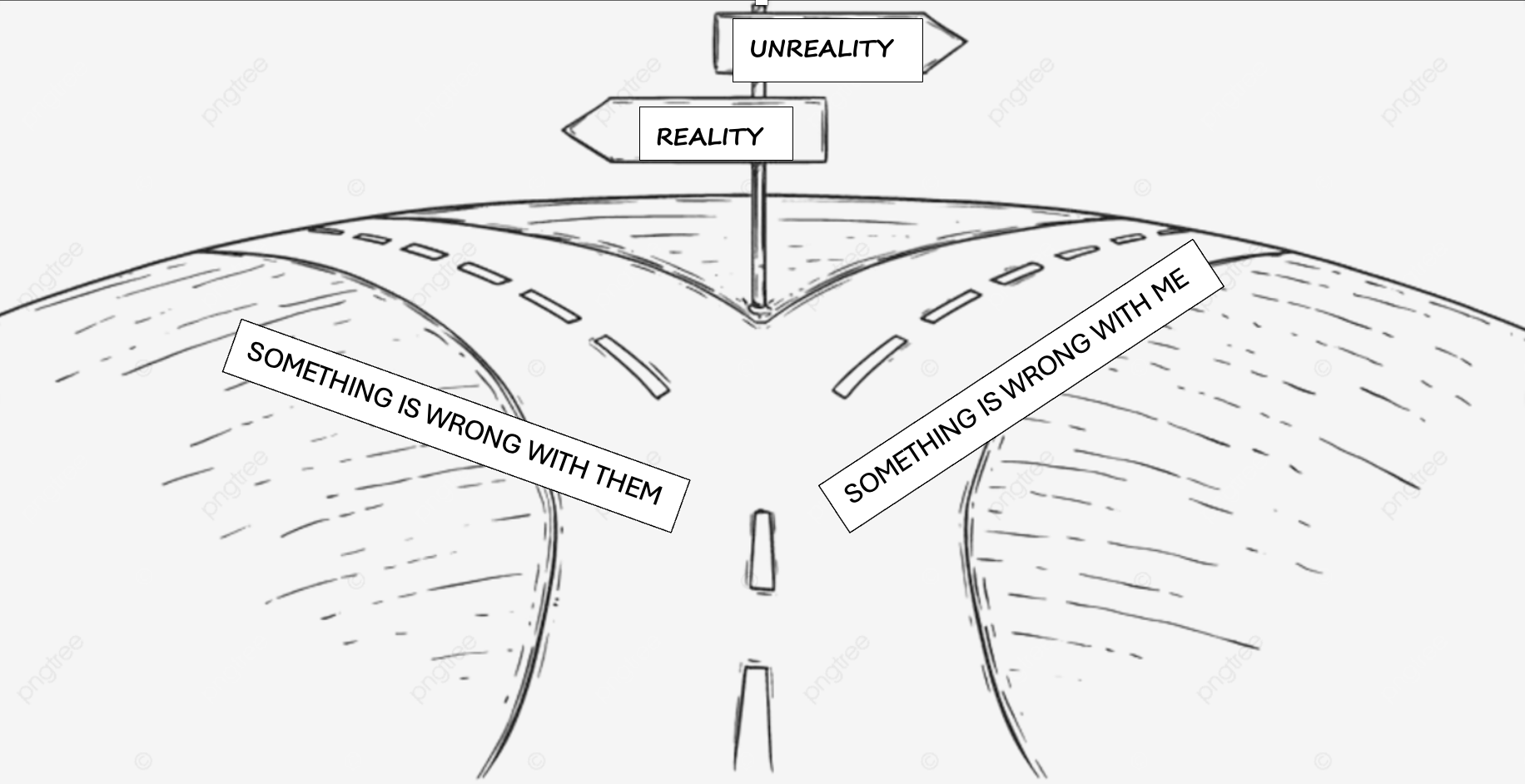
But what happens when our experience with a caregiver activates BOTH instincts at the same time? When a parent is both a source of need and fear?

This dilemma for childhood trauma survivors deeply impacts our sense of reality about ourselves, others and the world. Learning how we brilliantly coped as children can clarify the path forward towards a new sense of safety in our adult lives.

In this online seminar, we’ll look at writings from Judith Herman, Gabor Maté, Janina Fisher and Carl Jung that demonstrate the “choiceless choices” children have between the reality that something is wrong with their caregiver and the shame that something is wrong with them. Mapping out what these authors teach helps us see clearly the healing journey we’ll need to embark on to address the chronic shame we experience.

Date: Wed Oct 15th

Time: 5:30-7:30 PM MST (on zoom)

Cost: $125 per seminar per person

5 Things Sustaining My Soul

Empty Nesting Day 16: Most days there is a tsunami of emotion pulsing just under the surface and it takes all of my regulation skills to find a dose of equanimity. These five source of soul sustaining wisdom have become companions in this strenuous season of transition.

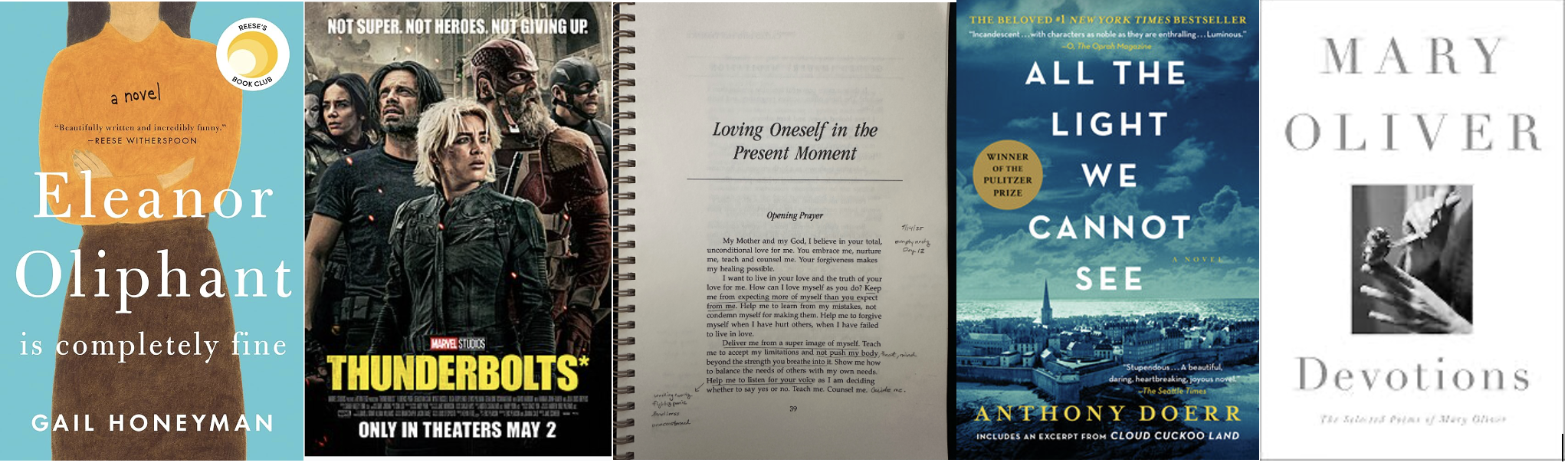
#1 Gail Honeyman’s book Eleanor Oliphant is Completely Fine: Told in the first person, this tender story of a trauma survivor battling agoraphobia, OCD and the voices of her cruel mother is inspiring and, in my clinical opinion, on point in mapping how we outgrow a small life constructed by woundedness and enter into a more spacious and honest way of moving through our relational world.

#2 Released in May, Thunderbolts, the latest film in the Marvel Cinematic Universe, is for anyone who has ever battled shame—which means it’s for ALL of us. Even for those not familiar with the characters, the wisdom, insight and vision of what it means for a group of people to communally battle shame on someone’s behalf reminds me why I’m a therapist.

#3 “Keep me from expecting more of myself than you expect of me.”

This one line from an opening prayer in Virginia Froehle’s guide Called Into Her Presence: Praying with Feminine Images of God, has helped me relax into the reality of not having the energy I expected in these weary weeks. Bekah Stewart, friend and author of Permission to Matter, turned me on to this gem that is becoming a lifeline in a season when being motherless is excruciating.

#4 I’m just 80 pages into Anthony Doerr’s novel All the Light We Cannot See, for which he won the Pulitzer in 2015, and I’m enamored! This short paragraph is anchoring me to the truth that the pain we are unaccustomed to does not control our lives.

“The despair doesn’t last. Marie-Laure is too young and her father is too patient. There are, he assures her, no such things as curses. There is luck, maybe, bad or good. A slight inclination of each day toward success or failure. But no curses.” (p. 28)

#5 In poignant chapters of life I often circle back to poetry. These closing lines from Mary Oliver’s poem Wild Geese help me imagine new ways of feeling connected to people even though I no longer belong to a school community.

“Whoever you are, no matter how lonely,

the world offers itself to your imagination,

calls to you like the wild geese, hard and exciting,

over and over announcing your place

in the family of things.”
ONLINE SEMINAR SERIES

Beginning October 15th Understanding Abuse Dynamics & Symptoms

This 4-month seminar series will deepen your understanding of how psychology and theology intersect around crucial clinical topics central to our faith and our world.

Choiceless Choices: Surviving Caregiver Harm

Oct 15, 2025: 5:30-7:30 PM MST on Zoom