Full Catastrophic Self

5378-1024x768.jpg

“When we ask human beings to show up without their full self, without their full, catastrophic self, with all of the messes that they are, with all of the discomfort, when we deny that we hold certain belief systems from our childhood, that we created those belief systems to survive the challenges of our childhood — what we are cutting ourselves off from is the very source of much of our creativity, much of our innovation. We actually become less productive, less imaginative. We lose our spontaneity and laughter and humor, because we have cut off, if you will, limbs.”

~Jerry Colonna, founder of Reboot Inc.

ca·tas·tro·phe

  • an event causing great and often sudden damage or suffering

  • a disaster

When I first heard Jerry Colonna speak the phrase “our full catastrophic self” a deep and historic place in my soul that had been holding its breath for a long time released a long exhale. How did he know that deep down I am a catastrophe? And yet in his On Being podcast interview, I heard no hesitancy, apology or shame in his tone of voice. Rather than whispering from inside a musty, dark confessional booth, Jerry Colonna was declaring in the town square a reality many of us suppress.

What does your ‘full catastrophic self’ look like? What belief systems does it hold from how you survived your childhood? What creativity, spontaneity, laughter and humor might be recovered if you released your full catastrophic self?

Minimizing Degradation

Screen Shot 2019-10-08 at 4.40.59 PM.png

“It seems less degrading to give one’s self than to submit to compulsion.”

In her memoir, Harriet A. Jacobs writes these words in defense of what she considered an immoral act. Instilled with a high standard of purity through her grandmother’s strong Christian faith, she cunningly thwarted the relentless sexual assaults of her married, white master from ages 11-16. It was not until her master began building a cottage for her on the edge of town that she compromised her convictions in order to ensure her future children would have a chance at freedom.

Afraid of becoming defenseless against the rape her master would use to propagate his slave population through forced motherhood, she gave herself to an unmarried free white man who had gained her affection through kindness. Though published in 1861, her piercing truth defends all of us who have survived the violence of our stories by “choosing” to give ourselves to things that offered a greater measure of dignity and control.

What choices have you made to survive harm in your story that left a residue of regret and shame on your soul? What did you give yourself to that seemed to offer greater hope and freedom? What would it mean to reframe these choices not as merely “immoral” but as brave efforts to minimize the degradation you were experiencing?

Invisible in the Mirror

woman-holding-mirror-on-grass-reflection.jpg

“Anxiety. It’s such a peculiar thing. Almost everyone knows what i feels like, yet none of us can describe it. Maya looks at herself in the mirror, wonders why it can’t be seen on the outside. Not even on X-rays—how does that work? How can something that bangs away at us so horribly hard on the inside not show up on the pictures as black scars, scorched into our skeletons? How can the pain she feels not be visible in the mirror?”

from Us Against You by Fredrik Backman

What invisible inner reality bangs away horribly hard at your insides? What hidden scar from your story would never show up on an X-ray though it still needs the care, protection and healing a sling, splint or cast would provide? To whom in your life can you voice your invisible pain?

Imaging a Void

screenshot-2019-04-08-10.24.34.jpg

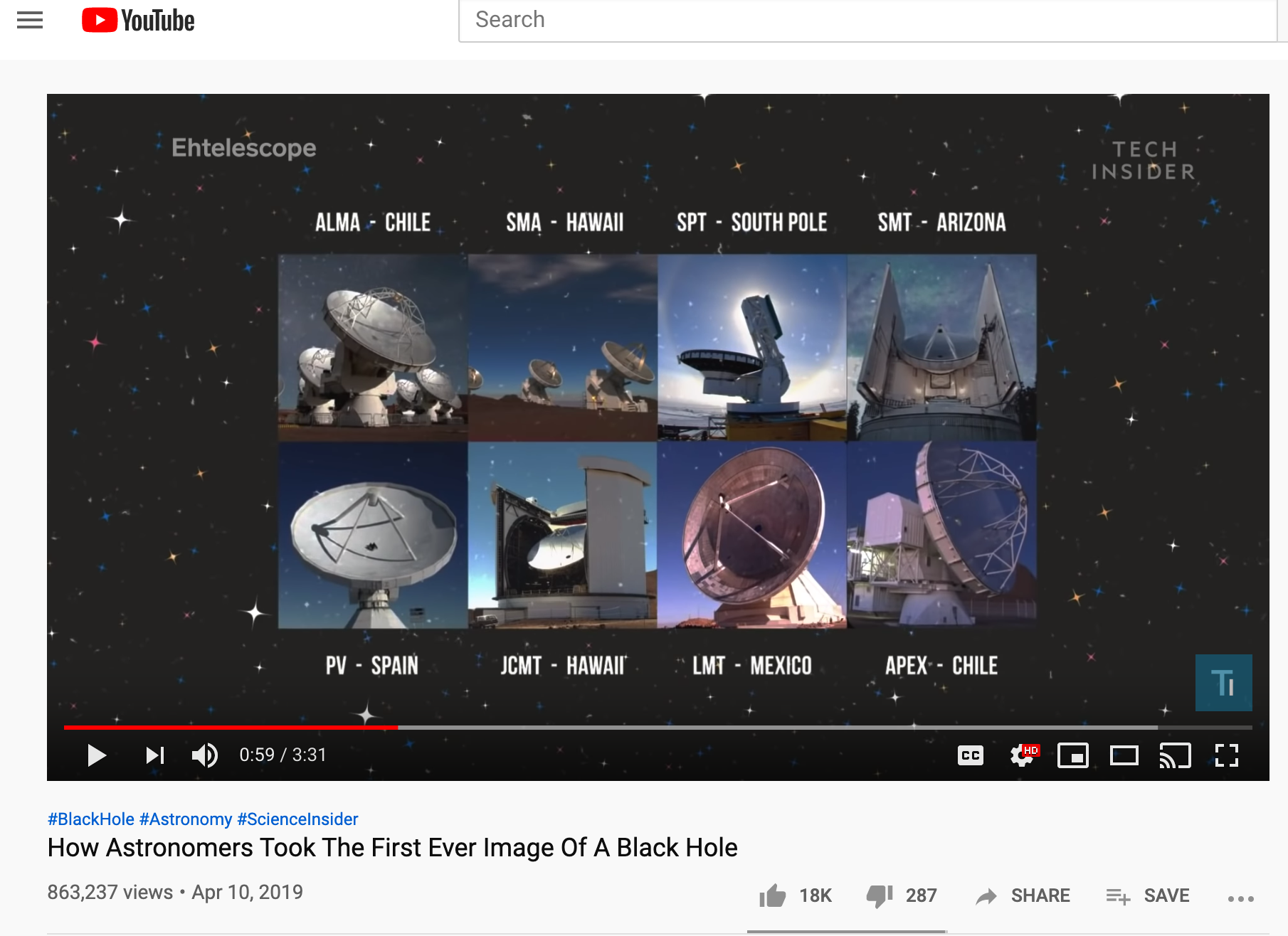
This past April, after two years of combining and analyzing data, global astronomers constructed the first ever image of a black hole. The Event Horizon Telescope Team (named after the term for the the edge of a black hole that is the gravitational place of no escape) brought together eight radio telescopes stationed at different points across the planet and synced by powerful atomic clocks.

As I learned more about this miraculous event, I was struck by the similarities between a black hole and the subtle, almost impossible to name, darkness that inhabits many people’s stories.

  • I grew up in a good Christian home.

  • My parents were never divorced.

  • I always had everything I needed.

  • I was never abused growing up.

These statement can all be true and an adult can still struggle deeply with issues that make them feel crazy. We all have unnamed places of darkness in our lives and I believe speaking our untold stories in community requires a great cloud of witnesses (maybe even eight!) to see the way well-disguised harm has robbed our lives of light.

Evil by its very nature is invisible. The more subtle evil is, the harder it is to image. The most important photos of our lives are ones where there is no light. But how do we take a picture of something that does not emit light? How do we see a void?

No single person on earth can take a picture of the damage done by darkness in their story. Ours lens are all too small. We all need an Event Horizon Team. A team to see the accretion disks in our past—the points in time when our dignity traveled so close to darkness that it broke apart our glory.

As you watch the video below, do you hear how difficult it is to capture the voids of protection, care, comfort and nurturing in our stories? When in your story do you suspect the gravitational pull of darkness? Do you have an Event Horizon Team that helps you bring together these elusively invisible images?