Strategic Ambiguity

C2029DE9-9939-4139-9FB8-09019DABFED8_1_105_c.jpeg

Having lived in Asia for 17 years, I still geek out over news articles tracking cultural and political trends of the continent. In April, The New York Times published an article entitled The New Taiwan Tensions in which it stated:

“President Biden may need to choose between making a more formal commitment to Taiwan’s defense or tempting China to invade.”

Much of the United State’s access to China since President Nixon’s historic visit in 1972, was founded on the idea of strategic ambiguity. Strategic ambiguity was the US’s refusal to acknowledge Taiwan’s right to self-governance in its relationship with Beijing while simultaneously seeking to protect the island from being invaded. It was helpful 50 years ago in walking a political tightrope, but the lack of clarity grows more costly as China’s power increases.

In the past month, I’ve thought a lot about strategic ambiguity in my life.

  • What tightropes did I walk growing up?

  • Where did a lack of clarity about what was happening help me survive?

  • What truths in my story do I want to leave unacknowledged but also protect myself from?

  • In what ways is refusing to “choose a side” in telling my story as an adult cost me deeper relationships in the present?

I’m always grateful when clients are honest about the difficult fork in the road that comes when they are clear about their story. Shifting their focus from “what’s wrong with me?” to “what happened to me?” creates a painful dilemma. To name the harm in their homes growing up feels like it invites them to shift the blame onto theri family for how they struggle. I often remind them they aren’t blaming, only naming. In the naming of what others, often their parents, did (or did not do) they invite all the characters in their story to be more human. The naming helps them turn from self loathing towards forgiveness which opens up more loving connections with themselves and possibly with those who have hurt them.

Why Story?

Check out Brene Brown’s May 5th podcast with Oprah & Bruce Perry to hear such a great summary of how vulnerably sharing our story in community sets the trajectory for our healing path.

“If you have the best therapist in the world and you see them once a week but you have nobody else in your life the rest of the week, you’re never going to get better—relationship are the agent of change.”

Join Me!

In June, my online story membership will explore the film Searching For Bobby Fischer (1993). Themes such as competition, contempt, giftedness, underachieving as defiance and chasing phantoms will take us deeper into our own stories!

Five seats open for 90-minute virtual groups to explore our stories in community.

Where Does This Leave You?

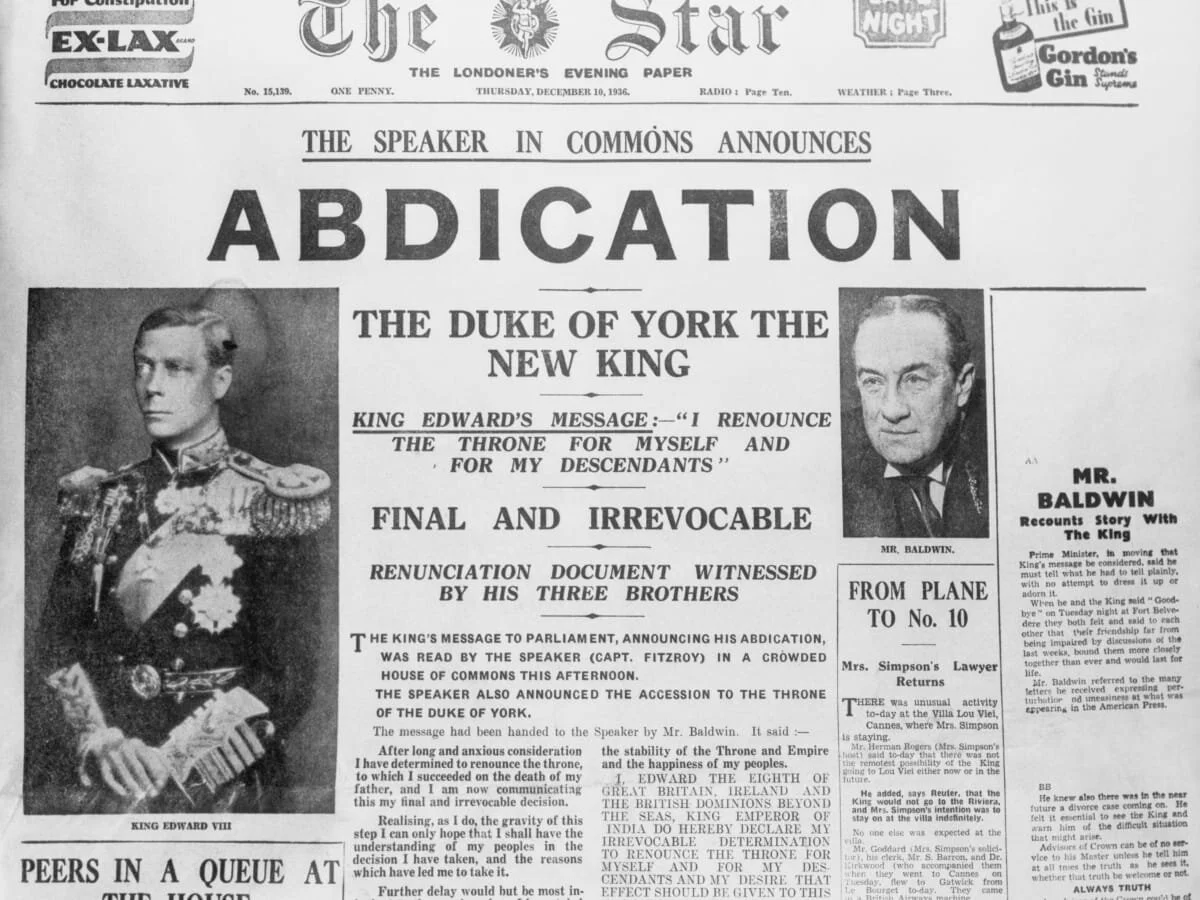
newspaper-with-headlines-on-king-edwards-abdication.jpeg

With the passing of Easter Sunday, those of us who celebrate the liturgical church calendar now turn towards the coming of Pentecost. I can’t think of two more challenging realities to integrate into my life—that death is not the end of the story and I have been given great power.

As a therapist I think a lot about power. What experiences leave us powerless? How do we cope? What power were we meant to have in our stories that was taken from us? But recently I’ve also realized:

We suffer not only when innate power over our personhood is shackled but also when we are forced to exercise power we were never intended to hold.

The movie The King’s Speech (2010) is a fascinating study in the ripple effects of abdicated power. When King Edward VIII hands over the throne to his younger brother, the course of both men’s lives, a royal family and a nation are changed forever. At one point in the movie Geoffrey Rush’s character, a speech therapist named Lionel, asks the Duke of York (soon to become King George VI played by Colin Firth), “Where does this leave you?

It’s a poignant and important question. Who abdicated power in your story and where did that leave you stumbling through a role you were never prepared to play? What were the gifts and scars those scenes embedded in your life?

This month, my online membership program, Between Touches, will use this piercing film to exam the role power played our own young stories. Join us, in this unique spiritual season, as we long to rest in the reality that death has been conquered and yet still find ourselves desperate to see that same power manifested in our lives.

Not Unmarked but Not Unhinged

thumb_720_450_1371_f.jpeg

I was doing fine with the anniversary of COVID’s lockdown until Denver had a two day snow storm that left me cooped up with my people wondering how we were going to fill the days.

The past two weeks have been a struggle to stay present and patient with my internal panic. This symphony of voices have comprise the compass I’ve held in my hands, seeking to still the spin and find the horizon.

From Tara Brach, a mindfulness teacher and author of Radical Acceptance:

“There’s only one question that really matters and that is what are you unwilling to feel?”

From John O’Donohue’s poem “For the Time of Necessary Decision”:

May we have the courage to take the step

Into the unknown that beckons us;

Trust that a richer life awaits us there,

That we will lose nothing

But what has already died;

Feel the deeper knowing in us sure

Of all that is about to be born beyond

The pale frames where we stay confined,

Not realizing how much vacant endurance

Was bleaching our soul’s desire.

From Jan Richardson’s poem “Blessing for One Already Brave”:

Yet I have seen the blessing

that came after the rending—

how you took what was torn

and made a life

not unmarked by

what had passed before,

but not unhinged by it.

You know about doors,

know what depends upon them,

know the grace that comes

in creating our own

and the power of choosing

how we will cross the thresholds

we never hoped to see.

Minding the Gap

shutterstock_505836010-med.jpg

Like many in the past few days I was captured by Oprah’s Sunday night interview with Meghan and Harry. I didn’t watch their picture perfect wedding viewed by over two billion people worldwide, but my ears were glued to the words they used to describe their process of dis-entangling from an oppressive system.

There are so many great truths in the interview but two things took my breath away.

First, I appreciated their ability to name that it was more than leaving a royal family with prestige, power and privilege, it was also about escaping a 1200 year old institution—the entrapment of a monarchy.

Second, they constantly explained the difference between what it looked like in pictures and what it felt like inside the palace.

At one point Meghan said:

When the perception and the reality are two very different things and you’re being judged on the perception but you are living the reality of it, there’s a complete misalignment and there’s no way to explain that to people.

I don’t know what aspect of your life comes to mind when you read this quote, but in so much of my story work with clients we “mind the gap”—the gap between their perception and the reality of their childhood story. It’s this very misalignment of the past that is hard for others to understand from the outside and prevents us from getting the help we all need to come out from under systems that aren’t protecting us the way they promised.

99.9% of us will never get our nationally televised interview with Oprah to set the record straight, but communities of storytelling can serve the same purpose—a chance to speak, witnesses who gasp at the appalling moments we describe and who believe us.

This month I’m offering two opportunities to learn about stepping into your own story—to tell your version within the context of safe community.

Sexual Harm Survivors Story Group Informational Meeting (Female)

  • Monday March 22nd 7-8:15 pm MST

Between Touches Story Membership Group Informational Meeting (Co-Ed)

  • Tuesday March 23rd 6-7:15 pm MST