Disavow & Withdraw

February’s third article on how children survive trauma inside their home is now available on Substack. Subscribe for free to get full articles sent to your inbox every Monday!

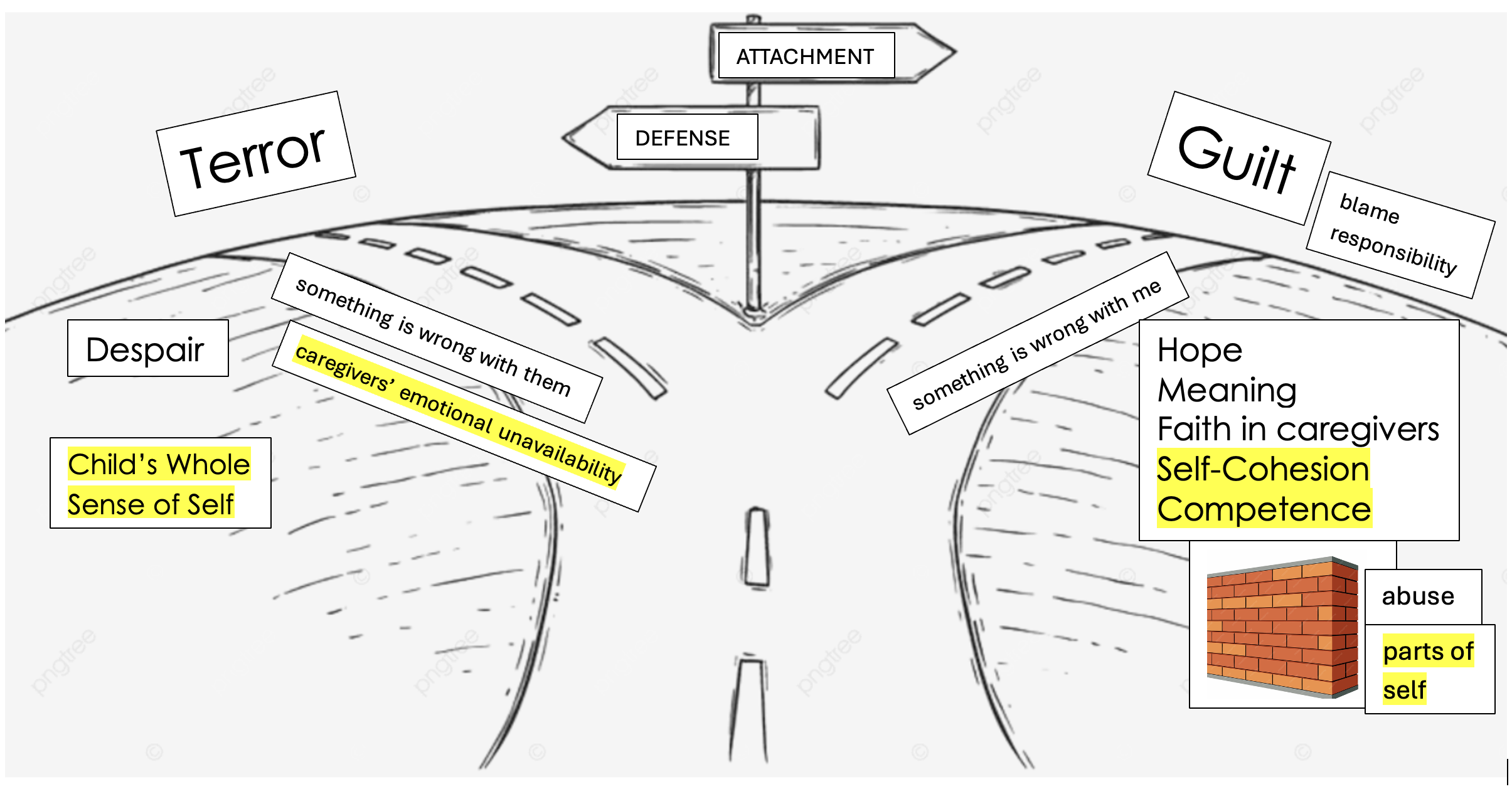
In another crazy twist of non-reality, denying ourselves helps us hold ourselves together and feel competent.

Once a child chooses to bury the parts of them that are disrupting their parent, two “good” things happen. First, they feel like everything is more steady inside of them because anything in them that is threatening closeness with their parent has been removed from their self-expression. Second, they can now function at a higher level than when all the parts of them were present on the surface and made life messy. When their negative feelings are distant, they can focus, achieve and learn what they must for approval and acceptance by an unwell caregiver.
Helpless Terror or Unbearable Guilt

Part 2 of how children survive harm from caregivers now available on substack. Subscribe for free to get notifications directly from substack!

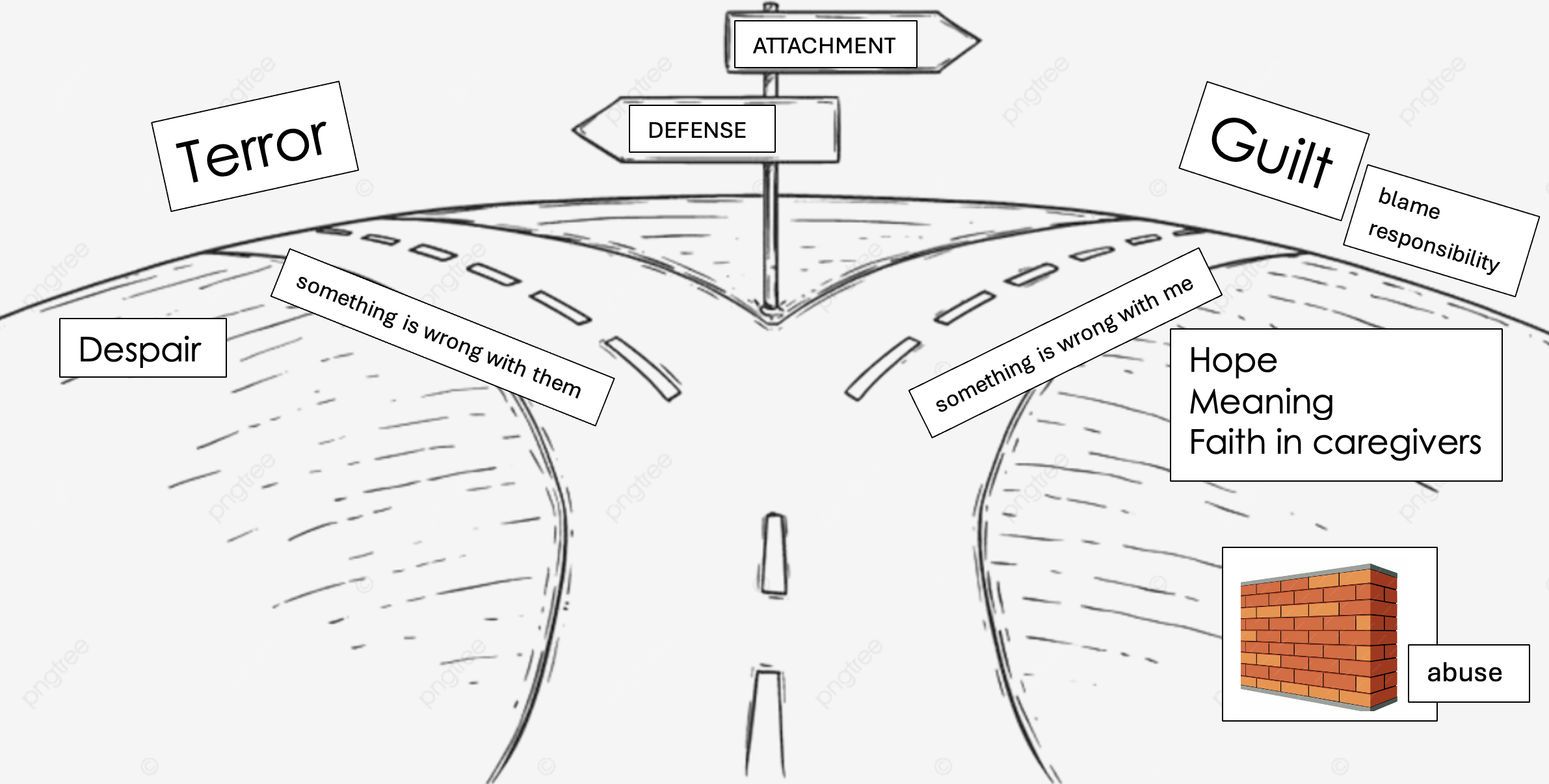
“In this crazy twist of non-reality, shame becomes the steadying, grounding, stabilizing choice.”

Two Competing Instincts

In her book Healing the Fragmented Selves of Trauma Survivors: Overcoming Internal Self-Alienation, Janine Fisher writes:

“When attachment figures are abusive, the child’s only source of safety and protection becomes simultaneously the source of immediate danger leaving the child caught between two conflicting sets of instincts.” (p. 24)

Read the rest of the article for free on substack!

Searching for Reality

For free content on childhood trauma recovery throughout the month of February, head over to my substack and subscribe for free! The February overview complete with resources, encouragement and regulation practices is now available. Here is a small piece of what is posted:

Seeing as an Uncertain Experience:

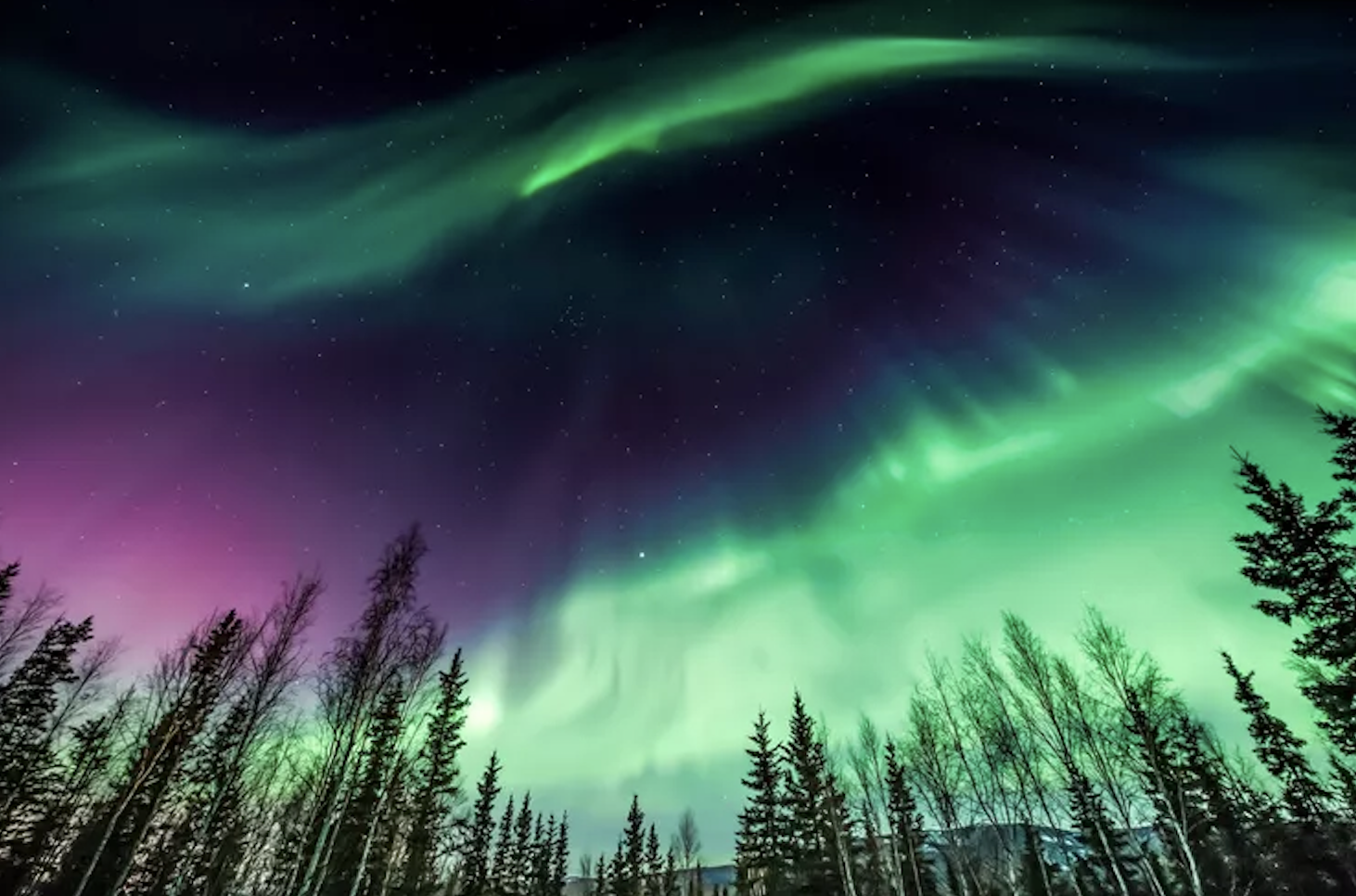
I love this beautiful passage from Katherine May’s book Wintering.

“At that moment, I realised that every image of the [northern] lights I had ever seen had been misleading. I had been poring over photographs of neon displays as lurid as disco lights, and watching YouTube videos of lights that strike out against the night sky, bold and distinct. These are invariably sped up, the luminous greens and pinks enhanced by long exposures. Look closely, and you will see the stars shining through the aurora in every picture; they are not even bright enough to eclipse tiny pinpoints of light from trillions of miles away. They move slowly, like drifting clouds. Seeing them is an uncertain experience, almost an act of faith. You have to get your eye in, and I honestly don’t think I would ever have spotted them at all had I not been told they were there.

There is nothing showy about the northern lights, nothing obvious or demanding. They hide from you at first, then they whisper to you. We would squint into the sky, and say, ‘is that them, there? Do you think? Over there? Yes. Yes! Maybe. I don’t know….’ But then, eventually at a pace set entirely by the firmament, we were given the gift of seeing them, as if in reward for our faith and patience. Then, we seemed to see them everywhere.” (p. 162)