As a young girl, the first thing I remember wanted to be was an astronaut, so I’ve always had a fascination with space. Now as a therapist, I totally geek out over the amazing metaphors for healing found in the exploration of our universe. As we wrap up laying the foundation for upcoming content around childhood trauma, I present you with two amazing analogies to keep in mind in the coming months.
Supernovas vs. Black Holes:
The first recorded observation of a supernova was by Chinese astronomers in 185 A.D. The explosion of light that took place in the final stages of death of the supermassive star (later named SN 1054) was easily visible with the naked eye—the telescope won’t be invented until the early 17th century. In 1054 A.D. another supernova was so exceptionally bright—four times brighter than Venus—that it was visible in the daytime for 23 days and in the night sky for over a year. Supernovas, like “headline harm” in our stories, are dramatic, eventful, easily visible if we are looking for them and are accompanied by searing white hot heat.
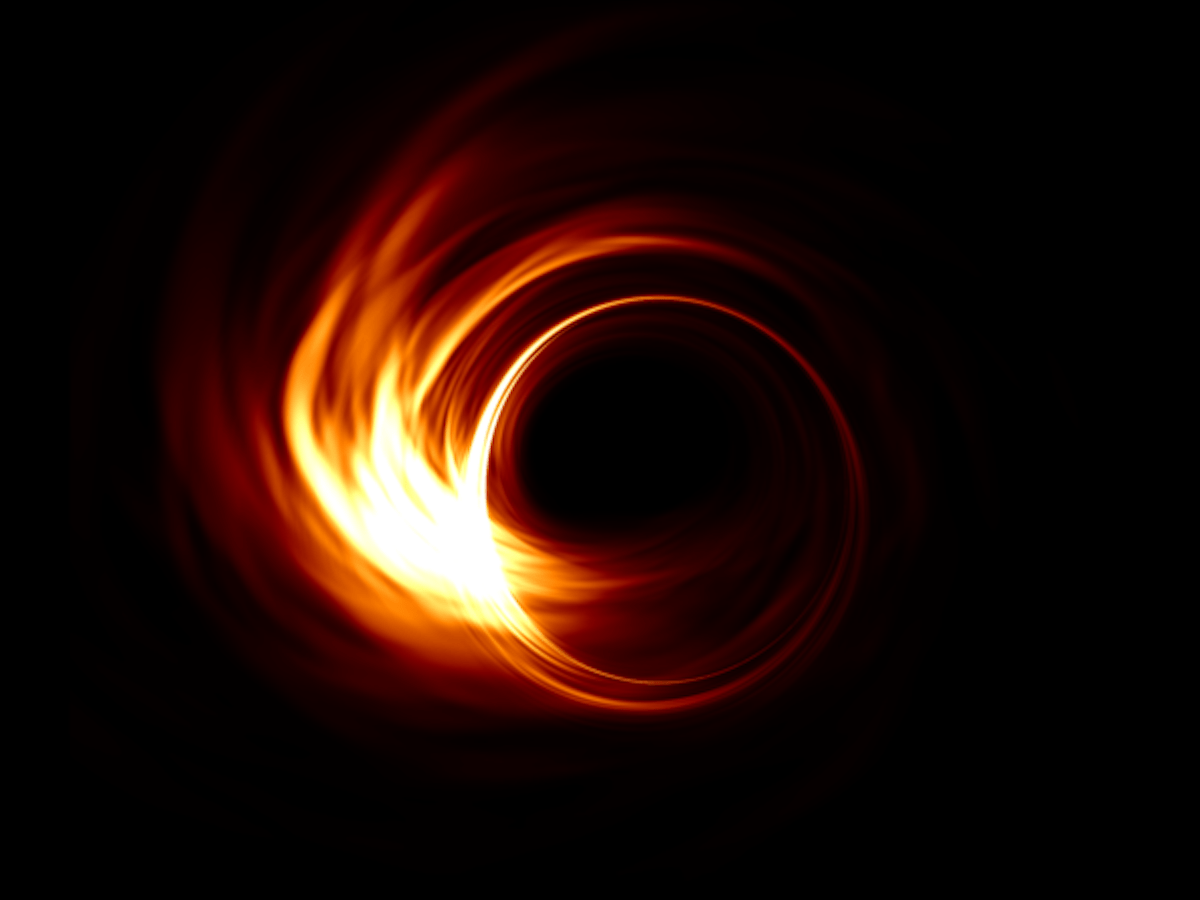
In contrast, it wasn’t until April of 2019, after two years of combining and analyzing data, that global astronomers constructed the first ever image of a black hole. The Event Horizon Telescope Team (named after the term for the edge of a black hole that is the gravitational place of no escape) brought together eight radio telescopes stationed at different points across the planet and synced by powerful atomic clocks.
As I learned more about this miraculous event, I was struck by the similarities between a black hole and the subtle, almost impossible to name, darkness that inhabits many people’s stories.
I grew up in a good Christian home.
My parents were never divorced.
I always had everything I needed.
There wasn’t any abuse in my family.
My siblings and I loved each other.
These statements can all be true even as an adult struggles deeply with issues that make them feel crazy. We all have unnamed places of darkness in our lives, and I believe speaking our untold stories in community requires a great cloud of witnesses (maybe even eight!) to see the way well-disguised harm has robbed our lives of light.
Evil by its very nature is invisible. The more subtle evil is, the harder it is to capture on film. The most important photos of our lives are ones where there is no light. But how do we take a picture of something that doesn’t emit light? How do we see a void?
As you watch the video below, you can imagine how difficult it is to capture the voids of protection, care, comfort and nurturance in our stories.
The Gemini Space Program:
I’m in the middle of Jeffrey Kluger’s book Gemini: Stepping Stone to the Moon, the Untold Story which explores the US space program of the 1960’s that bridged the Mercury missions that first propelled an American into space and the Apollo missions that took a man to the moon. Standing in my local bookstore, I was captured by the back cover’s synopsis:
It was no easy jump from manned missions in low-Earth orbit to a successful moon landing, and the ten-flight, twenty-month celestial story of the Gemini program is an extraordinary one. There was unavoidable darkness in the program—the deaths and near-deaths that defined it, and the blood feud with the Soviet Union that animated it. But there were undeniable and previously inconceivable successes. Against all odds, the remarkable scientists and astronauts behind the project persevered, and their efforts paid off. Later, with the knowledge gained from the Gemini flights, NASA would launch the legendary Apollo program.
Kluger could just as easily be talking about our journeys of healing. The middle grueling years between realizing historic pain is limiting our emotional lives and the alleviation of shame that allows us to come home to ourselves in way we’ve never known is an arduous journey.
The Gemini Program was designed to test equipment and mission procedures in Earth’s orbit and to train astronauts and ground crews for future Apollo missions. The two-man Gemini spacecraft was larger and more sophisticated than its Mercury predecessor. The progress was slow, but its key victories were establishing endurance for a 14-day mission, mastering orbital rendezvous and docking, executing the first U.S. spacewalks and demonstrating precise reentry and landing control.
These are some of the same elements I am wanting to help us build through my upcoming publications:
Larger and more sophisticated thinking about our stories
Building our endurance for sustained living on our journeys toward healing
Experiences of rendezvousing and docking with other survivors for encouragement and sharing wisdom
Learning how to enter and return from the hard work of grieving that often feels like a G force launch into a thin atmosphere and the “controlled plunge” back into the gravitational pull of our lives
Unfortunately, the Gemini program did not eliminate all danger, but it did prepare NASA for the 238,900-mile journey from earth’s orbit to the surface of the moon.
On Jan 27, 1967, three astronauts died in the Apollo 1 launch pad disaster. Among them was “Gus” Grissom who uttered this famous quote before perishing. “If we die, we want people to accept it. We’re in a risky business, and we hope that if anything happens to us it will not delay the program. The conquest of space is worth the risk of life.” The next Apollo mission would be named Apollo 4, skipping the identifiers of Apollo 2 and Apollo 3 to honor the three lives lost.
The healing journey we are on does not always feel safe and often comes at a high cost, and yet is a worthy risk if we will continue to choose courageous self-care and self-compassion.
Reflection Questions:
When in your story did you feel the gravitational pull of darkness? How did the light of who you are disappear into it for a time?Who is in your Event Horizon Team that helps you bring together these elusively invisible images to see the reality of what was missing for you growing up?
When you think about the “Gemini years” of your own healing journey, what support and resources do you most need to continue? What do you sense you are learning even in the grueling and costly stage of naming the harm you have survived?