NEW MEMBERSHIP OPTIONS

download.jpeg

New offerings tailored to your needs!

Beginning March 1st: Membership packages designed for….

individual growth, service providers & professional therapists.

REQUEST YOUR 1-MONTH FREE TRIAL

TRADITIONAL COMMUNITY MEMBERSHIP:

Four-person online communities designed to offer personal care and support as you engage your past in finding greater freedom in the present.

One spot left in my newest group! Visit for FREE to see if it’s right for you! Next group call takes place on Wednesday February 26th 7:00-8:30 AM MST.

Cost: $75 per month (3-month minimum enrollment)

Last month to join at a 20% discount—price increases to $95 on March 1st.

SEND ME FEBRUARY'S CONTENT!

NEW FOR SERVICE PROVIDERS:

Want to deepen your therapeutic leadership & presence?

Like me, many of you desire to see wholeness in the lives of others! Beginning in March, I’m offering a unique learning opportunity for social workers, chaplains, nonprofit employees, ministers, small group leaders, and missionary care specialists.

Subscribe as a service provider and receive:

  • monthly content (including a 30-minute audio file expounding on important therapeutic categories)

  • monthly article engaging three key questions from community members

  • Access to an optional members-only 60-minute learning call designed to equip you in leading from your own story work in your vocational ministry

12 Memberships Available

Cost: $55 per month (3-month minimum enrollment)

ENROLL AS A SERVICE PROVIDER

NEW FOR INDIVIDUAL GROWTH:

Want fresh ways to connect with your story?

My most basic membership subscription includes:

  • monthly content to engage with on your own or share with a community you are already a part of.

  • 25% discount ($30 off) on 75-minute coaching calls for months when you need additional personal processing support

Enroll now to begin in March and receive access to your choice of two past months of content for FREE.

Unlimited Memberships Available

Cost: $25 per month (3-month minimum enrollment)

ENROLL FOR PERSONAL GROWTH

NEW FOR THERAPISTS:

Want a supportive community in which to share about your own story while honoring professional boundaries?

Beginning in March, I’m offering a therapist-only space that provides the privacy you to need to engage your story and discuss work challenges without navigating dual relationships.

Membership includes…

  • monthly content (includes a 30-minute audio file lecture on key therapeutic categories)

  • Access to an optional therapist-only 75-minute processing call: a place to share your personal connections with the material and discuss therapeutic categories & implications with your clients.

  • access to an optional online discussion platform for professional resource sharing and referrals

8 Memberships Available

Cost $65 per month (3-month minimum enrollment)

ENROLL AS A THERAPIST

Parasite and Privilege

Parasite_Crop860.jpg

Last Friday, my new favorite NPR podcast, Pop Culture Happy Hour, tipped me off that Parasite was a fabulous film and true contender for Best Picture. Seeing it only the night before the Oscars aired, my awe at its creative brilliance was still fresh allowing me to celebrate as it won award after award.

There are so many praiseworthy aspect of Bong Joon-Ho’s stunning film but I most valuabled its expansion of my view of privilege. Much like Roald Dahl uses the ridiculous in his book Matilda to expose subtle, abusive parenting, Joon-Ho’s far-fetched thriller expands our window of tolerance for engaging the uncomfortable reality of the disparity between affluence and poverty.

At one point in the film, the Kim family has their almost subterranean apartment flooded by a overnight torrential downpour. Images of floating possessions, a backed up sewage system and a night in a makeshift shelter at a school are a gut-punching contrast to the Park family’s naive relief over the rain’s benefit to their lawn the next morning. Parasite helped me concretely understand the privilege of welcoming rather than fearing the weather.

And that has stayed with me as I’ve shoveled snow almost daily this past week to keep my inclined driveway safe for my teenage driver. Privilege is the luxury to roll my eyes at the forecast or enjoy watching the snowfall from beneath a quilt, rather than fearing its effect. The means to insure my teenage driver, owning a family car (much less two!), and being able to afford a shovel are all privileges of wealth.

Snow has concretely anchored me this week to the flood scene in Parasite, but other threads in my life are also woven into the reality of my privilege.

Last week I began a new role as a case manager for the nonprofit Bridge of Hope. Tonight I’ll visit my first client, a single mom enrolled in our housing subsidy program designed to prevent her recidivism back into homelessness. I am anticipating this new role will force me to straddle both my present privilege of being a two income family as well as my past childhood of living not far above the poverty line as the child of a single mother.

Last week I also spent hours on the phone seeking to secure a medication that has helped me successfully manage a chronic illness. My copay for the first two years of my diagnosis was $0 but insurance companies and their specialty pharmacies altering the “tiers” of the drug I rely on have now made it unaffordable. I’m straddling both the privilege of having health insurance and not qualifying for medicaid as well as the handicap those are, ironically, in seeking financial assistance.

Parasite. Privilege. Snow. Homelessness. Medication. Any movie that helps me more deeply engage my own personal experience of privilege, as well as feel seen in ways it is absent in my life, is indeed Oscar worthy!

What did privilege look like for you growing up? In what ways did you experience affluence and poverty—either physically or metaphorically? What story of straddling privilege and the absence of it do you need to tell in order to be more compassionate to yourself and others in the present?

Unlearned

photo-1424115087662-5845efc6b366.jpeg

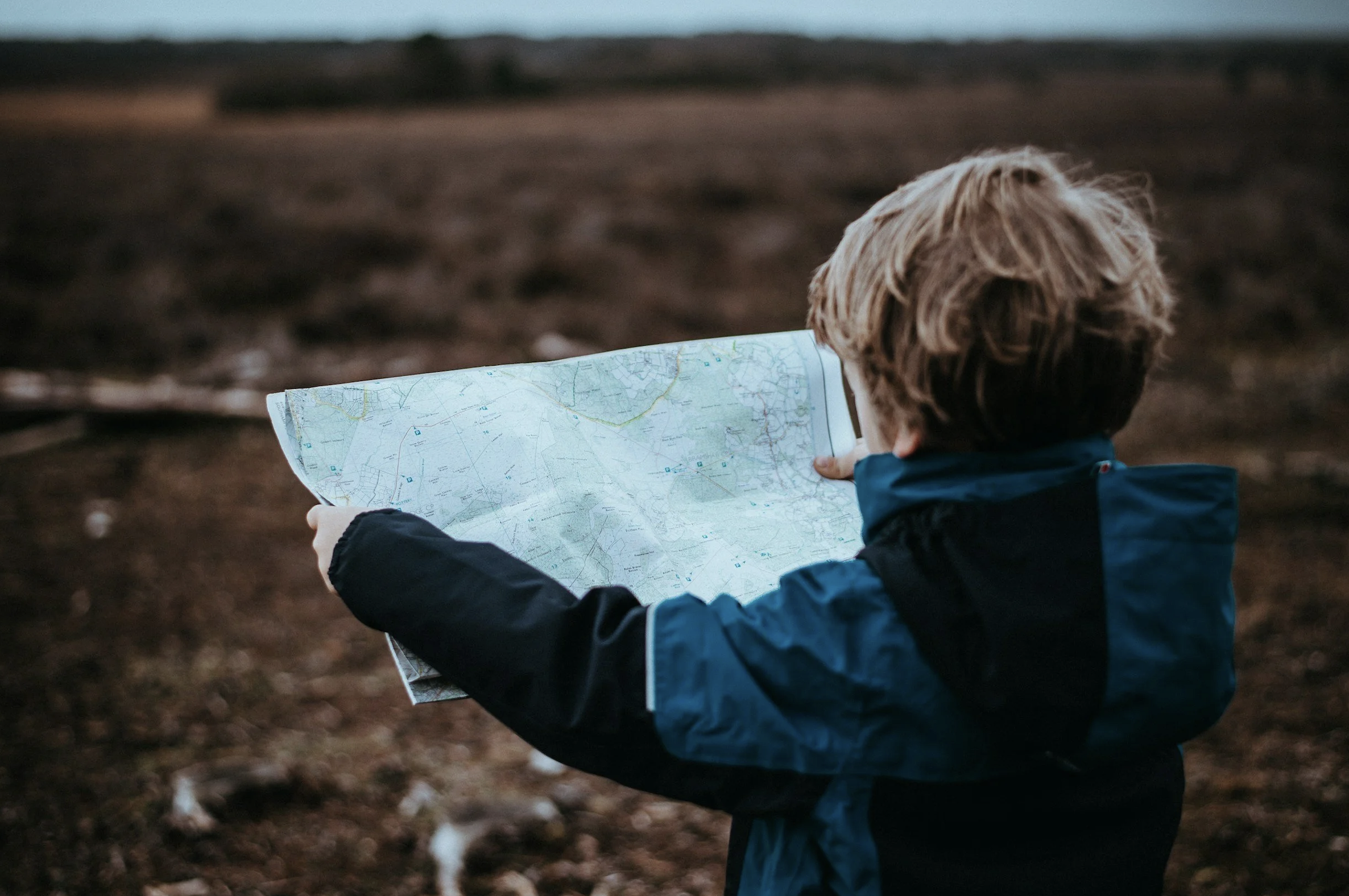
My favorite new discovery is an On Being podcast called Poetry Unbound. The first episode highlights a poem by Brad Aaron Modlin that is both simplistic and haunting, reminding me of places in my story where I felt like an orphan trying to navigate life on my own without a compass.

Whether it is how to be at rest with unfinished things, give myself over to a fantasy novel, celebrate without sugar or appreciate eye liner, there is much goodness I’ve taught myself as an adult that would have been so nourishing to have learned at an earlier age.

“What You Missed That Day You Were Absent from Fourth Grade”

A poem for what you learn alone by Brad Aaron Modlin

Mrs. Nelson explained how to stand still and listen
to the wind, how to find meaning in pumping gas,
how peeling potatoes can be a form of prayer.

She took questions on how not to feel lost in the dark.
After lunch she distributed worksheets
that covered ways to remember your grandfather’s
voice. Then the class discussed falling asleep
without feeling you had forgotten to do something else—
something important—and how to believe
the house you wake in is your home.

This prompted Mrs. Nelson to draw a chalkboard diagram detailing
how to chant the Psalms during cigarette breaks,
and how not to squirm for sound when your own thoughts
are all you hear; also, that you have enough.

The English lesson was that I am
is a complete sentence.

And just before the afternoon bell, she made the math equation
look easy. The one that proves that hundreds of questions,
and feeling cold, and all those nights spent looking
for whatever it was you lost, and one person
add up to something.

What do you remember learning, discovering or figuring out on your own growing up? What did you want to be able to do but had no one to teach you? In what ways did you feel you were left to stumbled through the dark and what heartache did that bring? What story of navigating life alone do you need to tell in order to be kinder to how long it’s taken you to learn what others have always seemed to know?

Untold Participation

the-matrix-red-or-blue-pill_original.jpg

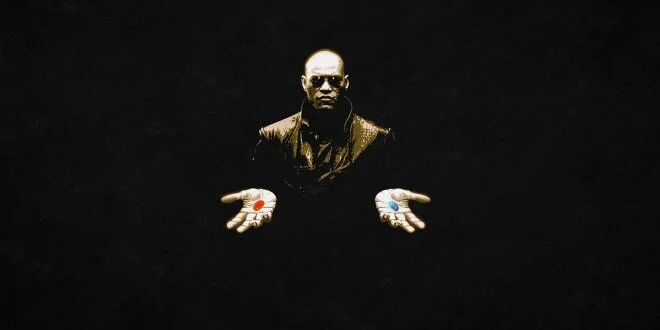
In my early 30’s, I crossed over a life-altering threshold as I began to tell close friends not only that I had suffered childhood abuse, but more importantly what had happened in those scenes. It was a “red or blue pill” decision and I am forever grateful to former pastor Brian Wallace for knowing it would open up the new vistas of healing for which I was so desperately hungry.

This is why I love Maya Angelou’s words:

There is no greater agony than bearing an untold story inside you.

Her memoir, I Know Why The Caged Bird Sings, was my first exposure to another survivor’s account. I don’t remember if I, at age 16, connected Angelou’s story to my own, but I consider her a forerunner for my own future courage. I am forever grateful for my English teacher, Vicky Yoder, who knew it was an important book for young people long before organizations like RAINN educated us that 1 in 5 girls are victims of childhood sexual abuse. Curating communities of caring witnesses where unspeakable stories can be told has become the cornerstone of my practice.

In a recent On Being podcast (time stamp 8:05- 10:53), Serene Jones, President of New York’s Union Theological Seminary, brilliantly connects the idea of untold stories and shame.

During her time at Yale, while listening to a lecture on lynching, she came across a picture labeled: Laura Nelson, 1911; Okemah, Oklahoma.

She goes on to explain:

“There were maybe 300 people in the town in 1911, and two-thirds of them were my family. So there was no way that my family did not know [of] or, most likely, participate in [the lynching]. But it’s not a story that [has] been passed down.”

Heartbroken, she draws this painful conclusion:

If they had not participated, they would’ve told the story.

For so many of us, the stories that go untold, sometimes for generations, are the ones in which we believe we participated in the harm done to us. The stories of how we have survived the brokenness of our world are excruciating to tell, but they are also the only way I know through the rabbit hole.

What stories did everyone in your family seem to know but no one talked about? What topics, growing up, did you intuitively know were off limits? What story about a “forbidden” part of life do you need to tell in order to find greater freedom from shame?