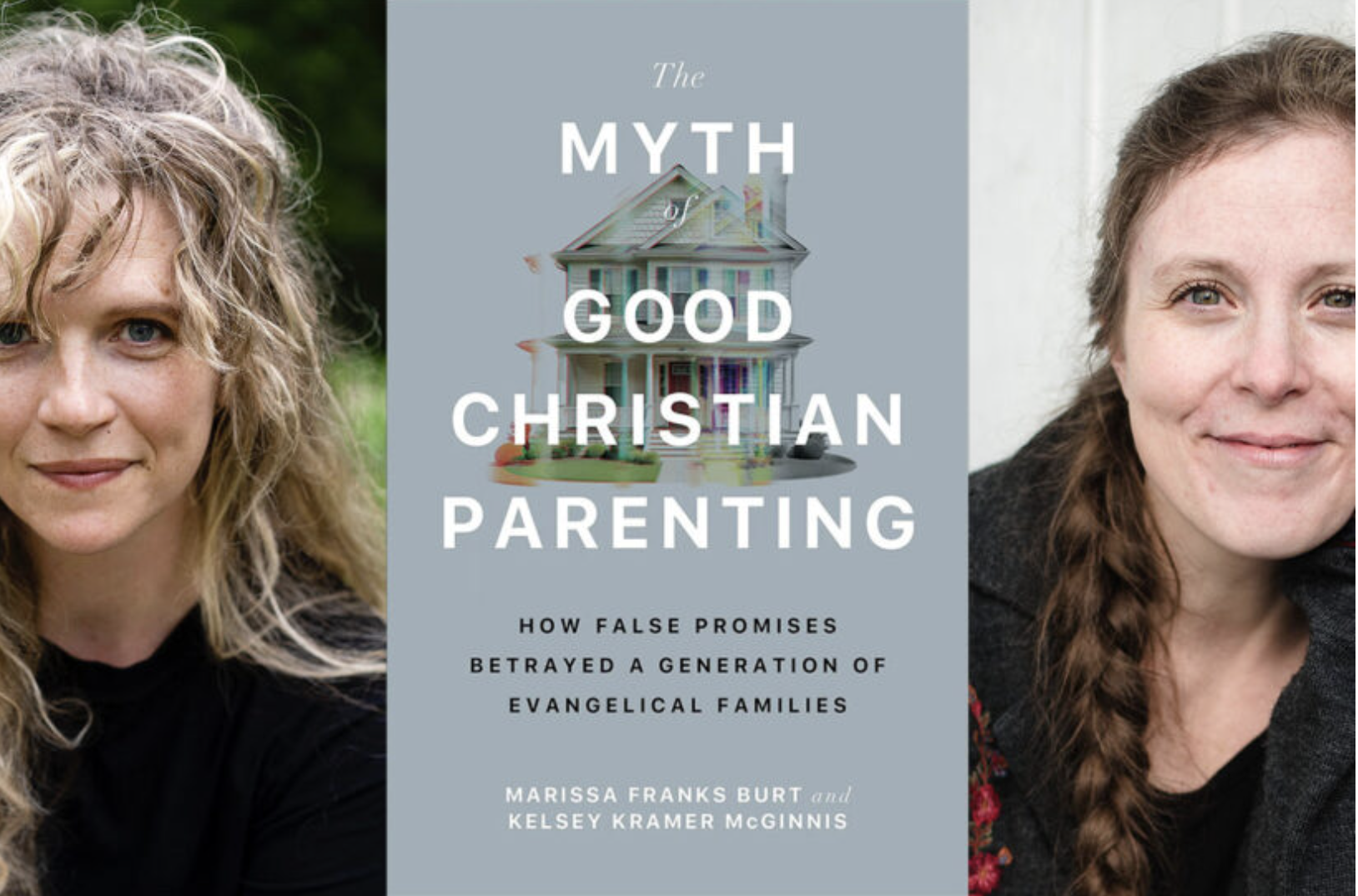
Finally, after a few weeks delay, I am starting our dive in the concerning DNA of cultural Christian parenting. Releasing this material has been slower than I anticipated for one straightforward reason: It was sobering, slow work to get through Burt & McGinnis’ sobering book The Myth of Good Christian Parenting: How False Promises Betrayed a Generation of Evangelical Families.
Before we look at three of the four most concerning traits (we’ll examine the fourth in next week) I want to highlight an important distinction between what is Christian and what is Biblical. I am intentionally using the word Christian, as Burt and McGinnis do, to signify what has become normative in American evangelical culture, not what is commanded in the Bible. The two are easily conflated and it is crucial to distinguish them.
“It’s easy to slip the label ‘Christian’ onto any number of things—denominational affiliations, doctrinal frameworks, well-behaved families, moralism. But in its most basic sense, what makes something Christian is whether it reflects the life and teaching of Jesus.” (p. 187)
In so many ways, traditional Christian parenting literature made popular in the 1980s, 1990s and early 2000s, by such names as James Dobson, Bill Gothard, Tedd Tripp and Gary & Anne Marie Ezzo, does not reflect the life and teachings of Jesus.
Click here to read the rest of the article on hierarchy, ownership and spiritual enmeshment!